Dr Angus H. Wright
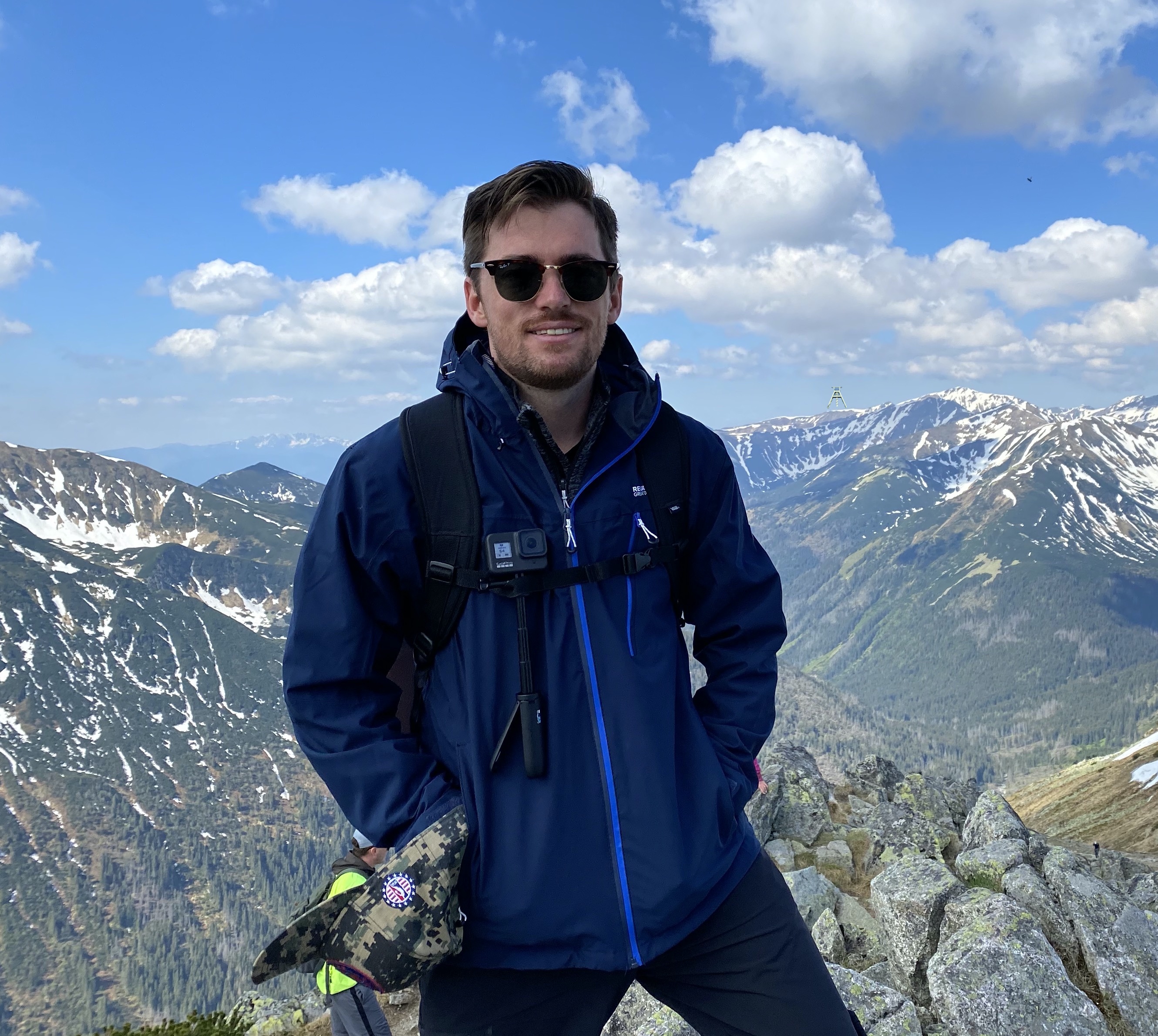
Research Fellow in Astronomy, working at the Ruhr-University Bochum.
Welcome
About me
I am a Junior Research Group Leader in the German Centre for Cosmological Lensing (GCCL) at the Ruhr University Bochum (RUB), Germany, and PI of the DFG Collaborative Research Center SFB-1491 project `Dark matter and gas in galaxies'. I undertook my PhD at the University of Western Australia, where I studied the growth and evolution of baryonic mass as a member of the Galaxy and Mass Assembly (GAMA) collaboration. Following my PhD, I worked for the Kilo Degree Survey (KiDS) at the Argelander Institute for Astronomy at the Friedrich-Wilhelms-Universit"at Bonn, where I began my work within weak gravitational lensing. Since 2017 my research has focused on weak lensing survey science, and particularly on optimisation of photometric image reduction and analysis methods, systematics mitigation, and statistical analyses. I currently lead three working groups within the KiDS Weak Lensing collaboration: the Data Release Group, the Redshift Calibration group, and the Legacy Cosmic Shear group. Beyond KiDS, I am very active within the Euclid collaboration as the lead of the redshift calibration task force (zTF), a member of the photometric redshifts organisational unit (OU-PHZ), the shear measurement organisational unit (OU-SHE), the shear calibration task force (SHECAL), the visual mask tiger team (VMPZ-ID), and weak lensing science working group (WL-SWG). Beyond weak lensing, I am a keen astrostatistician, an innovative lecturer, an animated astronomy outreach presenter, and an enthusiastic but nonetheless mediocre golfer.
Academic Profile & Curriculum Vitae
My long-form Academic CV is available in PDF format here.
Lecturing & Resource Materials
I currently teach two courses at the Ruhr University Bochum:
- Introduction to Statistics for Astronomers and Physicists (15 1.5hr lectures)
- Cosmology (15 3hr lectures)
Additionally I have short courses at the SFB1491 Plasma & Astrophysics Winter School:
- Astrostatistics (3 3hr lectures)
Finally, I have taught the following contributing lectures at various universities (including Technische Universit"at Dortmund and the Rheinische Friedrich-Wilhelms-Universit"at Bonn):
- Astrostatistics (1 1.5hr lecture)
- Observational Optical & Near-IR Astronomy (1x 1.5hr lecture)
Lecturing Philosophy
During my academic career, both behind and in front of the lecturn, I have experienced the diversity of students' learning styles first hand. Some students find mathematical derivations illuminating, whereas others are most receptive to visual explanations via diagrams and sketches. Some students find individual exercises helpful, while many prefer first to tackle problems interactively during a lecture.
With this in mind, I tailor my teaching materials and style to the needs of the cohort that I am teaching. I am firmly of the opinion that, if there is even a minority of students who struggle to grasp the (simple or complex) concepts being presented in my lecture, then I have not done my job as an educator. Put simply: the lecturers job is not to simply deliver content, but rather to ensure that said content is received and understood. It is an interactive process!
In the sections below I provide:
- descriptions and summaries of my courses;
- course materials in a range of formats; and
- lecture recordings (where available) hosted on my YouTube channel.
Introduction to Statistics for Astronomers and Physicists
At the RUB I teach an introductory course in statistics for students studying Physics and Astronomy. The course is designed to be accessible to students with little or no previous statistical training. I attempt to develop a new aspect of the course each semester, and welcome comments/feedback about the course and it's contents. Any comments can be added to my AstroStats github repository using the issues list.
Astroinformatics
As a resource for teaching and student supervision, I have created a number of web-apps that demonstrate various aspects of Astroinformatics and statistical inference. These can be accessed via the below links:
Shift Fitting under Heteroskedasticity
Useful Links
Various academic and non-academic websites on which I am active and/or which are relevant to my career can be found below:
- Recorded Academic Presentations: Academic Talks
- Recorded Outreach Presentations: Outreach Talks
- Recorded Lectures: Lectures
- NASA ADS: AHWPublications
- ORCID: 0000-0001-7363-7932
- Researchgate: Dr Angus H. Wright
- Twitter: @AstroAngus
- German Centre for Cosmological Lensing: GCCL
Publication & Citation Metrics
According to NASA ADS/SciX, as of 26 October 2026:
| Metric | All publications | Refereed publications |
|---|---|---|
| Publications | 181 | 148 |
| Total citations | 12,815 | 12,730 |
| Average citations per publication | 70.8 | 86 |
| Median citations per publication | 22 | 30.5 |
| h-index | 57 | 57 |
| i10-index | 121 | 120 |
These citation counts include 1,305 self-citations. See the full ADS/SciX metrics report for additional normalized citation, readership, and download statistics.